Links


Saturday, March 3, 2012


Friday, June 17, 2011
Arsenal Transfer Talks: Should Arsenal Sign Free-Agent Patrick Vieira?

As of June 16, 2011, the Arsenal legend Patrick Vieira is a free-agent after finding himself outside the plans of Manchester City’s manager Roberto Mancini. The 34-year-old Senegalese-born defensive midfielder spent a year-and-a-half long spell at the Blues, scoring three goals in 28 matches.
Now that he is a free-agent, we can’t resist but ask the question: Can he be the salvation for Arsenal’s arguable lack of winning mentality?
On the surface, Vieira looks like a transfer target that Arsene Wenger may not be quick to dismiss. He is free to join any club he wants, has rich history with the Gunners, and is very experienced. But what makes him most considerable for Arsenal’s signature is his much-familiar character.
Who could forget his indomitable spirit and leadership qualities?
Patrick Vieira was the captain of Arsenal for four hugely successful years in the club’s history: from 2002 to 2006. He was a key member of the “Invincibles” squad of 2003/04 and was the man who added the last significant trophy to Arsenal’s accolade room in 2005: scoring the winning penalty in the final of the FA cup against Manchester United.
But it was his character, more than his abilities on the field, which was in the root of many successes for Arsenal. He was the leader, a man who team-mates could look up to in difficult times. He still has it in him.
Roberto Mancini has reportedly offered Vieira a coaching role at Manchester City because of his influence on the other players, but the soon-to-be-35 player has refused with the belief that he still has something to offer to the game the most likely reason.
“It is still 50-50 at the moment [to retire or keep playing].” Vieira said earlier this month
“It would not be a problem for me to stop tomorrow because I have been lucky enough to experience everything… I still want to play and if I have an exciting proposition here (France) or somewhere else in England, I would probably play on.”
“If I have nothing exciting, I will stop. There is a chance I could stop, but at the moment my mind isn't telling me that I will be stopping in a couple of months.”
Quatar, where he can still find clubs who will be able to match what he was earning at Manchester City, the Major Soccer League, where his Arsenal ex-team-mate Thierry Henry is playing, or going back to France remain some of the probable destinations for celebrated midfield veteran.
But could it be Arsenal?
He could play an important role as a player/coach and will definitely offer something to the considered “green” squad of Wenger. Undoubtedly, he can exercise positive influence on the players in the dressing room by infecting them with that much-sought-in-life attitude of “never give up”.
The biggest block to such a move would, of course, be the wage the Arsenal club is willing to pay to the aging player. At 34, he is unlikely to be offered an astronomical wage, but his motivation may lay elsewhere: he is a fan of Arsenal and is likely to play Champions League football again.
Whether Arsenal signs him or not, there is no doubt whatsoever Vieira will remain one of the club’s all-time legends.
But as in fairy tales, wouldn’t it be wonderful for the great performer to perform in front of the audience that witnessed the best of his years as a footballer yet again? Wouldn’t it be wonderful for Patrick Vieira to end his career at Arsenal?
It certainly will.
Saturday, May 14, 2011
Arsenal FC: Steps To Avoid the February/March Collapse Next Season
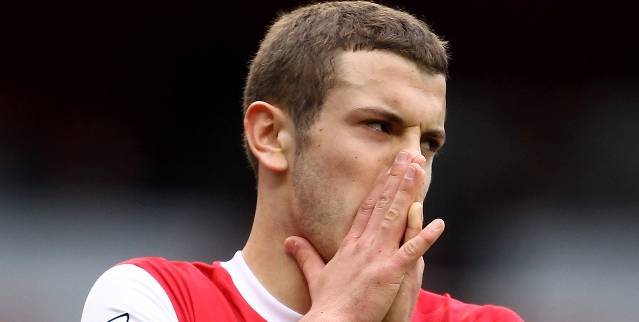
In the past four years, Arsenal have been a step away from going through the Premier League finish line triumphant. Losing several key players during the transitional phase of moving to the Emirates robbed the Gunners not only of depth, but also of experience.
Inevitably, results suffered. But what was interesting was how and when the negative results were more likely to occur. Logically, lack of adequate depth of the team meant limited resources. A player just cannot play all season without adequate rest. Injuries also go hand in hand with fatigue.
Hence, by mid-February or March, Arsenal’s strengths start to diminish to a level where they are title contenders no more.
Already in the pit hole of dwindled resources, the light that could bring them out—a nice blend of mental strength and experience—was also nowhere to be seen. Usually, after a negative result follows another negative result, if the chain is not interrupted by wise decisions—wise decisions that experienced players can take.
Arsenal have lacked that.
Those two factors contributed to the repetitive occurrences of negative outcomes in the months of February and March in the past four seasons—what we may call the winter collapse of Arsenal.
How to deal with that collapse? What to do to improve the chances of that not happening again next time?
Step One: Strengthen the Squad by Bringing in a Few More Bodies
The first step would be to buy yet another defender of close-to-world-class ability and partner him with Thomas Vermaelen, or promote a defender with huge potential and use him as cover for the rest.
Arsenal already have three very good defenders in Johan Djourou, Laurent Koscielny and Sebastien Squillaci.
Based on style of play, they are different from each other. Djorou, for example, is good in the air, marks well, positions himself adequately as well as reads the game well. Koscielny is brave, not afraid of challenges and is a great tackler. Squillaci is also good and very experienced, but tends to have lapses in judgment occasionally.
The Gunners also have one world-class defender in Thomas Vermaelen. He is tenacious, brave and good in the air, positions himself well, a good passer and a leader. On top of that, he possesses a formidable shot.
All in all, Arsenal have four defenders—a good number for any team out there. But in order for the next step in eliminating the February/March collapse to be put to work, another defender must be brought into the picture.
This can either be a defender brought from outside—a very good, experienced defender to partner Vermaelen—or a defender from the youth ranks to cover for the others, like Ignasi Miquel. The former would be the best choice.
On the defensive flanks, the need of good cover for Bacary Sagna on the right side is evident. A player with qualities similar to Sagna’s could be brought in and through Step Two, could contribute to Arsenal’s endeavors.
In midfield, Arsenal will benefit from bringing in yet another great midfielder. With the probability of Cesc Fabregas leaving in the summer, a void would be left, most likely benefiting youngsters as Jack Wilshere and Aaron Ramsey. But with his departure, the midfield line will be weakened minus one body and the skill of the Spanish captain.
A good choice would be a player who is in his mid-20s and has proven himself—one that has the necessary skill and vision to serve as a rock in difficult times. Of course, that will require some money to be spent, but with the club’s debt diminishing by the month that is likely to happen.
In the front, four attackers contribute to finishing off the Arsenal attacks: Nicklas Bendtner, Maroune Chamakh, Robin van Persie and Theo Walcott. It’s a potent forward line capable of dismantling even the most resilient defenses, but if we are to see Step Two put to work, we’ll need another attacker.
Of course, the hypothetical forward would need to possess skills worthy of world-class club’s forward line.
Now, we are ready to proceed to Step Two.
Step Two: Use Rotation
Give the opportunity for other players to take part in Arsenal’s hunt for trophies every other match. By having a squad with an almost evened out class spread among the players, the opportunity of giving rest to every one of them and creating an atmosphere of “friendly” competition is presented.
In defense, for example, a good mix of central defenders could be used, along with playing the covers for the full backs every third or fourth match, depending on the fixtures.
For example, Laurent Koscielny and Johan Djourou could start sometimes to rest Thomas Vermaelen and the guy who partners him. On the flanks, more playing time should be given to Kieran Gibbs on the left, and the cover of Bacary Sagna on the right side.
In midfield, there are plenty of talented players in the squad to make the use of rotation possible as it is, but Arsenal will surely benefit from signing one more talented and experienced player with a slightly more defensive-minded attitude. He could serve as a partner of Alex Song, playing just behind the more creative midfielders; this would also allow Jack Wilshere to develop his attacking game.
The probable departure of Cesc Fabregas can be a blessing in disguise.
The Arsenal captain has not given his best season this year following the huge speculation of him leaving for Barcelona during the previous summer. Also, he was plagued by a recurring hamstring injury. This, however, gave the chance to Jack Wilshere to rise to the challenge and, so far, he has done it perfectly.
In case Fabregas left Arsenal, the money could be used for buying the aforementioned midfield player and one more to serve as his replacement.
In attack, there is a wide variety of strikers in terms of style. Arsenal has Theo Walcott who could play either on the wing or as a striker; his speed puts him in a different dimension to the other strikers.
Nicklas Bendtner and Maroune Chamakh are of a similar mould. They are both good in the air and imposing in terms of physical stature. They could be rotated depending on current form and to give rest to other strikers.
Robin van Persie’s skill and deadliness in front of goal will ensure that he will start in most of the games, except when he needs rest. He could be partnered by either Walcott or Bendtner/Chamakh, depending on the opposition.
Another striker could be bought in the summer to serve as a cover in case of injuries, or the talent of Carlos Vela could be finally used to its full potential. In truth, he deserves to play for Arsenal, but so far, hasn’t received a real chance to prove himself.
Step Three: Increase the Tactical Variety

More than once Arsenal has been branded a predictable team. They like to play attacking football bent on possession of the ball. While this has been effective in the past and in the beginning of the season, it has also become predictable and easy to counter by other teams.
Arsenal suffers against well-organized defensive teams, and it is especially against those teams that something must be added on to increase the chance of snatching all of the points. While there is an entirely different game on the field, the psychological one could improve results with the implementation of several other tactical innovations.
For example, more shots from outside the box could be taken; more chip balls above the defense; more individual play; and last but not least, more traps should be laid. Passing the ball in their own half could draw out the oppositional team which would present a chance for a quick attack to be more effective amidst their more dispersed ranks.
Consistent tactical innovation along with rotation throughout the season—and especially during February or March, when the second fixtures between Premier League teams are played and fatigue is taking its toll—could do wonders for Arsenal.
Monday, April 11, 2011
Five Things We Learned after the Blackpool-Arsenal Game

Arsenal has been at the receiving end of skepticism since they lost to Birmingham in the Carling Cup in February with justification. In the last three-four years, February and March have proven to be the stage of the marathon in which Arsenal struggles to find remaining sources to make the final push.
This year didn’t look any different.
After three consecutive draws in the Premier League, their only remaining trophy to fight for, the Gunners have done to themselves what others cannot do—surrendered their title-winning aspirations for Manchester United to decide. It, now, depends on how United perform in their remaining six games. If they slip, Arsenal will have to show what they have failed to show this season so far—champions’ mentality.
A result of 3-1 over Blackpool may have provided a necessary injection of self-confidence that they so much need, but they still have some way of going back to their winning ways. In fact, it was a game of two faces: the second parts of the first and second halves, in which Arsenal controlled the game, and the beginnings of the halves in which Blackpool dug deep to defy the odds.
Here are a few key points worth discussing after Blackpool-Arsenal.
Jens Lehmann is a grandpa who knows how to keep the ball out of the net

The wacky German was the backbone of the Arsenal defense against fighting-relegation Blackpool. His close-to-perfect positioning and authority at the back, along with his aerial superiority, injected his team-mates with calmness and assurance.
But his football skills were only the tip of the iceberg.
At 42, Lehmann is experienced, very experienced. While he was ostensibly out of playing form, he showed the real importance of having the right mentality for the goalkeeping position. Scary and commanding as Lehmann is, he yelled every time when someone in front of him made a mistake making sure the players in front of him knew when they did wrong—and they did know.
Something else became evident as the game progressed. At one time, DJ Campbell received a through ball, but the assistant referee raised his flag to signal an offside situation. Having little time to respond, Campbell went on trying to go around Lehmann. What was strange was that the German keeper did what not a lot of other keepers would do: he made a full stretch to deflect the ball away from the feet of Campbell. Why did he do that?
It was psychological. By not allowing the ball to roll into his net even after the game had been stopped, Lehmann was sending a discouraging message to oppositional attackers. It’s that kind of mentality that a decade of football can teach you.
In the end, Lehmann signified what Arsenal has been lacking for a couple of years: someone who knows football is being played by ordinary men, who, in the end, can be influenced by ordinary things.
Fabregas’ passion has been waning

The Blackpool game was just another primary example of a lack of commitment by none other than the current Arsenal captain Cesc Fabregas. Last summer, amidst huge speculation that Barcelona wished to sign the Catalan-born Arsenal captain, Cesc filed for a transfer request.
After serious talks with Wenger, Fabregas decided to stay. But for how long was a question hanging in everyone’s mind. His attitude throughout the season has hinted that the most likely answer to this question is for only one more season.
Against Blackpool, Cesc was not his usual passionate self. While he distributed short passes, long and through balls in his usual brilliant way, there was something lacking in his desire to keep possession of the ball or win it back from the opposition. He made way too many mistakes trying to build up the Gunners’ game.
Blackpool turned the tempo up in the beginnings of the first and second halves. They became more aggressive and more direct—a tactic that is known to work against Arsenal. The Arsenal midfield desperately needed to raise their game, but mostly they desperately needed for someone to step up and throw his legs in the grinder and attempt to take the ball forward.
Surprisingly, and yet not so surprisingly, it was not the captain who did that, but Jack “Brave Heart” Wilshere. He received a few painful kicks, in the second half, but his dribbles did what they were supposed to do and eventually Arsenal regained control of the game.
Despite having suffered from nagging hamstring injuries this season, Cesc had to work harder and take more responsibility. He failed to do so and understandably was outshone by two other Arsenal players: Jack
Wilshere and Samir Nasri.
Arsenal have been incredibly unlucky in the defensive department

Yes, it’s an observation more true for the entire season rather than for the match against Blackpool. They have been deprived of the services of one of the best defenders in the Premier League, Thomas Vermaelen. The two new signings, Sebastien Squillaci and Laurent Koscielny, have been good, but somehow failed to form an effective partnership with each other. On top of that, a defender on the rise, Johan Djourou, suffered an unlucky injury to his shoulder which would rule him out for practically the rest of the season.
Having been restricted by unfavorable turn of events, Wenger needed to relocate his hopes to the potentially problematic partnership between Squillaci and Koscielny. The Blackpool game was yet another example of that.
This time it worked, but mostly because the cogs of the Arsenal machine turned well everywhere for most of the time. Defenders can shine, but only when other departments of the team do not work well. Squillaci and Koscielny had the chance to deal with dangers in a more chaotic environment when Blackpool took the initiative in the beginnings of the first and second halves.
This time, the healing wound of the Squillaci-Koscielny partnership withstood the test of being rubbed with salt yet again, but it was risk Wenger had to take.
Gael Clichy can make costly mistakes

Gael Clichy has been a pretty consistent left-back with tendency to make costly mistakes in the last two years. The 25-year-old Frenchman made an error of judgment against Blackpool early in the second half by keeping the ball, trying to dribble it out of danger. While his decision did not cost Arsenal a goal, mostly because of another brilliant Lehmann intervention, it was a schoolboy error.
Clichy is no stranger to making costly mistakes.
Earlier this season, he was at fault for Barcelona’s goal at the Emirates in the Champions League. Gael ruined the offside trap, set up by Johan Djourou, to allow a through ball to release striker David Villa.
In September last year, Clichy was also at fault for allowing Sunderland to score a very late goal, through Darren Bent, to equalize. In a melee in the dying stages of the match, the French left-back made a sloppy clearance and subsequently remained back while his team-mates attempted an offside trap. The result followed: three Sunderland players left alone in the box and Bent scoring the dramatic equalizer.
While Clichy can be consistent, at times, he can be sloppy and disoriented. He sometimes makes tactical mistakes and gets caught off his position. Against Blackpool, it was a mistake of a different sort though. He had all the time in the world to clear the ball or pass it to a team-mate, but failed to do so.
Jack Wilshere is one step closer to PFA Young Player of the Year, but Samir Nasri is one further

Jack Wilshere, once again, proved he is the revelation of the season by pulling off a great performance against Blackpool. The 19-year-old assisted Emmanuel Eboue for Arsenal’s second goal. On top of that, his dribbling and fearless attitude was a major factor for Arsenal to regain control of the game following a Blackpool inspiration early in the second half.
The performance is sure to put him one step closer to winning the PFA Young Player of the Year award for 2011. His biggest threat for that accolade will come from Nani and Javier Hernandez who also had a great year.
Samir Nasri, on the other hand, was not his usual self. Samir raised the bar a mile higher with his performance in the first part of the season, but against Blackpool, it was not his day.
He managed to miss a couple of very good chances to score and lost possession of the ball a bit more than usual.
Monday, March 28, 2011
Thomas Vermaelen: The Guy Who Has Been Missed All Season
A good video about Thomas Vermaelen. The central defender's sidelining due to injury during, practically, the bigger part of the season has been a huge disappointment.
Enjoy!
Enjoy!
Arsene Wenger: The Truth About Arsenal's Trophy Drought

For the sixth year in a row, Arsenal are struggling to win trophies. Three chances of doing so were wasted in a matter of two weeks. Who is to blame?
Anyone but Arsene Wenger.
In 15 years, Arsenal has achieved just enough to match the famous Herbert Chapman side of the 1930s that dominated England. Seven trophies won under Wenger, just the same amount as the 30s teams.
Yet, six years of trophy drought stand like a gaping wound in the heart of anyone who cares about Arsenal, a club that has won the Premier League 13 times and many other trophies, including the European Cup Winners Cup and the Inter-Cities Fairs Cup, but not the most prestigious one: the Champions League, the tournament that grants clubs the permit to call themselves giants of football.
For many years Arsene Wenger has failed to secure the trophy that could signify the real growth of the North London club. In fact, he has not won anything for six years, despite being close on several occasions.
What is wrong with the Arsenal?
Simple: It’s financial. It’s a business.
While the FA is concerned about spreading the popularity of the English Premier League, the clubs are left to do similar tasks themselves.
In 1999, following a spectacular double the year before, the administrative board made a decision to build a new venue capable of hosting over 60,000 people—a stadium that would bring Arsenal closer to the image of a big club, closer to the biggest clubs on the football stage.
It was a clear signal that work is being done to ensure Arsenal becomes one of the best, if not the best, in the world.
In 2004, construction of the stadium situated at Ashburton Grove began. 390 million pounds were needed to fulfill the immense project, and most of the money was borrowed from banks.
In 2006, the Emirates Stadium was built and its naming rights sold for 100 million pounds for the next 15 years. On top of that, business spread its hands from football and to property development in the place of the old iconic stadium Highbury.
The total cost of both projects amounted to an astounding 470 million pounds.
To make matters worse, the credit crunch gave birth to the economic crisis in 2007.
Despite all the obstacles, by means of rigid savings which have annoyed fans on countless occasions—inactivity on the transfer market, low players’ wages and others—the club has unbelievably managed to reduce its enormous debt to peanuts.
It now has no property debt, and the debt still looming for the Emirates project was cut to 206.3 million by February 2010.
The debt is continuing to diminish and, at the current rate, it will be fully repaid in a couple of years, with the new stadium left to generate clear profit.
With the Emirates business move, Arsenal has become the best-run club in England and is financially rivaling giants like Real Madrid and Barcelona.
Arsene Wenger has been a key figure in that transition becoming possible.
Frugal, he’s been called, stubborn for refusing to buy expensive new players, and other epithets derived from the frustration of fans who only see results on the field.
As teams like Barcelona, Manchester United, Liverpool, Chelsea and Manchester City sink into more debt, Arsenal are on their way up and out of it.
The French manager has managed to keep the team title-competitive in times of financial crisis. It's undoubtedly a big achievement and its long-term effects should not be underestimated.
Despite selling key players throughout the years, despite living through hard times of trophy drought, Wenger is on the right track.
The squad looks much closer to completion than it did last year. Yes, great disappointments were suffered in a matter of two weeks this season, but what should not be forgotten is that Arsenal is on a road to join the biggest football clubs in the world.
It’s funny how the club is already considered to be in the top 10, despite not winning anything for six years.
This year, although the nightmare of injuries in crucial times is beginning to affect performance, Wenger’s men have been consistent enough to have the chance to battle for the Premier League title once again.
Wenger is a man on a mission to help transform the club for the better and to leave it in a completed state before his departure.
Doubts dispersed, he should not be relieved of his post before he completes his mission. Fans should not overlook his work behind the scene.
Tuesday, October 5, 2010
Arsenal: Observations of a Fan on the Gunners' defeat against Chelsea

In the most anticipated match in this round of the English Premier League, Arsenal travelled to Stamford Bridge to face the current top of the crop team, Chelsea. Expectations tilted towards the team clad in blue as they were not only in a great form but also their opposition, Arsenal, was struck by unfortunate injuries.
Key players, namely Robin van Persie, Cesc Fabregas, Thomas Vermaelen, and Theo Walcott, were not available for Wenger’s selection - a fact that might have caused an annoying headache for Le Professor.
But, for once, I’m not going to talk about what happened and how it happened. I will tell you what a prejudiced Arsenal-minded fan, me, saw of it.
As I was preparing myself to sit down and watch yet another disappointing match - let’s face it, it all pointed toward another disappointment - I couldn’t help but notice a small tint of warmth forming in my chest. The kind of warmth that keeps you going despite all the setbacks.
Let’s call it hope.
Yes, I had hopes for this match.
Despite all the rationalities - the form of Chelsea, the injury-crippled Arsenal, Diddier Drogba, Lukasz Fabianski, and all the other factors that pointed towards extending the victory-less run of the Gunners - hope was finding its way into the light.
I almost got used to being taunted by friends’ remarks and comments about how Arsenal were going to get thrashed by Chelsea, but what was strange was that I simply left the events to unfold, knowing that they might be both right and wrong at the same time.
As the match progressed, that small positive feeling began to get confirmed. Arsenal were playing well enough: organised at the back, good passing, creating the occasional chances. They were countering Chelsea’s tactics very well. Still, I knew that anything could happen when football is played at this level.
The battles on field were exhilarating, the tempo leaving you with little time to think through what has happened. Unquestionably, it was a clash of the highest level - one that all the fans enjoy seeing each and every time.
Then it happened: Ramires sped on the left flank, crossed the ball, and with surprising agility Diddier Drogba sent the ball rolling behind Lukasz Fabianski.
The first rationale came true.
Drogba once again scored against his favourite opposition. This time, it looked like it was accompanied by a little more luck than his previous successful Arsenal endeavours. Luck or not, it was 1-0 to Chelsea.
Still, that comforting feeling was there, refusing to disappear.
As half time break approached, I thought about the possibilities that could get us back into the game. The first half was not that bad: Wenger’s side passed the ball well without making mistakes and looked like they have as many chances to score as their opposition.
We had Tomas Rosicky, Carlos Vela, Denilson, and Emannuel Eboue on the bench, who could be used as attacking options . With the absence of team captain and playmaker Cesc Fabregas, the weight of organising the attack landed on Samir Nasri, youngster Jack Wilshere, and Andrei Arshavin. Maybe with the involvement of Rosicky, it all looked like Arsenal’s attacks will improve.
The second half started, Rosicky was not on, but the Gunners stormed forward. For 20 minutes, they held Chelsea back, who I must admit looked very comfortable with the situation. The possession was 60 to 40 to Arsenal. Chances came and went, but the goal evaded them. Kudos to the good organization by the Chelsea defenders.
And then, around the 60th minute, the Gunners eased the pressure on the pedal. Did they get desperate? Did they lose faith that they could come back into the game? These and a lot more questions flooded me. As I saw it, their incessant infertile attempts demoralized them. And that’s when my hope, that they will come back, began to fade. Still light beamed, almost getting completely obliterated by a mistake made by Squillaci to allow Anelka to squander a perfect opportunity in front of an empty goal.
As I was watching Rosicky coming on, I knew he will not change a lot. He’s been below par in his recent games. Another thing that worried me was that Samir Nasri played below his abilities as well: he started making mistakes resulting in several counter-attacks by Chelsea; his imagination was wailing, failing to provide that killer pass.
Ten minutes from time, it all became obvious, and my fears were confirmed. Alex’s piledrive from a free-kick ended it: 2-0. In truth, no one could be blamed about this goal. Fabianski could have hardly done anything to reach it. It was a nicely executed free-kick that Chelsea had obviously worked on in training. Flaurent Malouda squeezed in the wall only to get out of the ball’s way when the free-kick was taken.
No one could have done anything to save that shot.
It was all done. It finished 2-0. Arsenal lost and continued their run without a win, not stretching to three games. As expected, Chelsea won the battle, but also, as expected, hope was still hanging around despite the signs pointing towards defeat.
Undoubtedly, I will still feel this way - no matter who Arsenal are facing. Hope never dies for a fan. It is still too early in the season to count them out of the title race; key players will return, and with little luck will stay fit. All that is needed is a little luck and hope because no one can refute the simple fact that the Gunners have the team to win the title.
Chelsea won the battle, but not the war. It’s far from over.
Thursday, September 23, 2010
Arsenal: Injuries Continue to Torment Arsene Wenger’s Side

Seven games into the new season and signs of last few years' problems begin to emerge again. It has always been a worrying factor, a most of the times deciding as well, that Arsenal’s players drop like flies with injuries throughout the season.
So far, nothing has been done to change that. Currently, Arsenal, along with unlucky Sunderland, are the team with most injured players in the Premier League.
Acoording to the assembled injury table of physioroom.com, here’s how it looks:
1. Arsenal – 9 injured players: Gibbs, Fabregas, Vermaelen, Diaby, Walcott, Van Persie, Frimpong, Bendtner, Ramsey.
2. Sunderland – 9 injured players: Gyan, Richardson, Ferdinand, Turner, Campbell, Mensah, McCartney, Gordon, Meyler.
Further down the table, here is how things look for Arsenal’s rivals:
5. Tottenham Hotspur – 7 injured players: Corluka, Kaboul, Gomes, Defoe, Dawson, O’Hara, Woodgate.
7. Chelsea – 4 injured players: Benayoun, Kalou, Lampard, Bosingwa.
13. Manchester United – 3 injured players: Hargreaves, Valencia, Carrick.
Things look grim in that department, and have looked so for several years now. Hope that something will be done to fix that before it becomes a major problem is the only thing left for the Gooners.
The full table can be examined here.
Tuesday, September 21, 2010
Arsenal Avenge On Tottenham In The Carling Cup With a DVD-Worthy 4-1

The much anticipated fixture between Tottenham Hotspur and Arsenal was undoubtedly the main event of tonight’s Carling Cup games. Two years ago, the Spurs enjoyed a terrific result against their arch-rivals, but they knew the past could not be dwelt on for tonight’s match.
Despite the never-absent electrifying atmosphere, both managers decided to save the energy of some of their more important players for the Champions League clashes next week and fielded well balanced teams of youth and experience.
Arsene Wenger had to serve a one-match ban after his improper behaviour towards the fourth official in the game with Sunderland. This seemed to be a small obstacle since modern technology provided him a way to communicate with his assistant Pat Rice.
Parallel to the battle of the minds, on the field, the fact that this was a Carling Cup clash did little to alleviate the pressure between the players.
Arsenal stung first when youngster Henri Lansbury took advantage of a frozen Tottenham defence to open his tally at the club. The provider of the assist, Jack Wilshere, then found himself on the receiving end of some committed sliding tackles, but he impressively remained unshaken by them.
The rest of the first half proceeded in a subtle battle of tactics. Arsenal had the possession of the ball for most of the time, but met a sturdy well-organized resistance from Tottenham.
After the break, Harry Rednap decided it’s time to use his benched lethal weapon—Robby Keane. And it paid off. With the clock showing 49, Keane took full advantage of a splendid through ball by Kyle Naughton, and put his team on equal terms.
With strengths pretty evenly distributed, Wenger decided to counter-act. It took him approximately ten minutes to get his wishes through to Pat Rice though and in the 72th minute Maroune Chamakh and Andrei Arshavin replaced Tomas Rosicky and Carlos Vela, respectively.
Rosicky did well to start the build-up for the sole goal, but in the second half his passes struggled to find their targets. Carlos Vela also had a quite game in the face of some recent outstanding performances.
The two new men’s impact was almost immediately felt as an attack from the left, starting from Arshavin, caused havoc in the Tottenham penalty box.
However, the winner could not be decided in regular time and the game was forced into extra-time.
Tiredness had sunk in by the time the first period started.
And it started with an explosion. Only 30 seconds after the whistle, Samir Nasri was about to get away when Sebastien Bassong brought him down in the penalty box.
Memories from the missed penalty against Sunderland flooded the minds of the Arsenal fans, but Nasri responded with a resounding: I’m the one who has to take penalties. Coolly, he sent the keeper to the other direction and put Arsenal one up.
Four minutes later, Tottenham might have thought they were witnessing a deja-vu. This time Chamakh was released by Andrei Arshavin only to be held back by Steven Caulker.
Referee Lee Probert did not hesitate to give Arsenal another penalty. Dispersing further doubts why he has to be the one to take penalties, Samir Nasri executed perfectly to put his team two goals up.
Having perceived where things are going, Harry Redknap tried to enforce his team replacing Sandro with Niko Kranjcar, but it all came too little, too late.
A quickly executed free-kick sent Arshavin advancing towards the corner of the penalty box from the left. With a well-placed low shot, he made the result bubble up to 4-1.
Harry Redknap now looked grim on his seat; the Tottenham fans started leaving the stadium; and the players clad in white looked to have accepted their fate; and Arsenal were playing out the rest of the game.
However, the Spurs had a couple of more chances to come out of it with dignity intact.
First, David Bentley frantically missed after a header from two meters, and then Roman Pavlyuchenko saw his shot denied by Samir Nasri on the goal line.
It didn’t work and it finished 4-1 to Arsenal. A result that came as sweet revenge for that game two years ago and important boost for their confidence before Saturday’s game against West Bromwich Albion.
Saturday, September 18, 2010
Arsenal Stumble Against Sunderland: Luck, Dismissal, Injury, Dubious Decisions

Arsenal’s travel to the unwelcoming Stadium of Light must have been filled with hope, and yet, with determination to come home with all the three points. They must have known a difficult fight was ahead of them. What they probably did not know was that they would have to do it without their captain Cesc Fabregas for the bigger part of the game, and with a player less than the opposition.
First whistle blown, Lady Luck smiled on the Gunners.
After an attempted clearance by Anton Ferdinand, the ball bounced off the foot of Cesc Fabregas, travelled about 40 yards, and landed in the net behind Sunderland keeper Simon Mignolet.
What a curious way to open the scoring, indeed. But what is strange about luck is that it comes and goes at the most unexpected moments.
Twenty minutes after the goal, Cesc signalled for a substitution. Tomas Rosicky came in to replace the captain who had received some type of injury in the deflection-caused goal.
The huge blow changed the game of the Gunners and they gave the initiative to their opponents.
Smelling blood, Sunderland immediately reacted and launched themselves forward like mad. Facing the oncoming pressure, the Gunners did not fold, managing to keep the defence organised and minimizing the mistakes to a minimum. Goalkeeper Manuel Almunia had to make some crucial interventions and he did his job without a flinch.
But the wheel had started turning.
Alex Song stole a ball from a Sunderland player in the midfield, but then referee Phil Dowd blew his whistle after the player went down. Song reacted angrily enough to spur Dowd into booking him.
Song’s reaction was partly justified by the replays which showed there was no contact between Song and the fouled player, but Dowd’s mind was in another dimension.
After the half-time talks, Arsenal came out a transformed team with one thing in mind: to finish the game off.
Ten minutes deep into the second half, Sunderland repelled another Gunner attack and started to organize a counter-attack. The already-booked Alex Song had little time to move out of the way of speeding Steed Malbranque and a foul was awarded. What was strange was that Phil Dowd decided the action of Song was worthy of being showed a second yellow card. Considering the easy first yellow card, many would find Dowd decision doubtful.
Arsenal was left to deal with hyper-active opposition with ten men until the end of the match. Sunderland mounted pressure, and on several occasions came very close to scoring.
The hostile atmosphere, though, turned out to be the perfect environment for the new figures in the Arsenal defence to show what they can do. Laurent Koscielny, Bakary Sagna, Manuel Almunia, and Sebastien Squillaci all battled well to protect the fragile lead of their team. Gael Clichy made a few mistakes, but nothing that could not be repaired by his well-performing team-mates.
With 20 minutes left, the referee was close enough to see Samir Nasri getting tripped inside the Sunderland box and awarded a penalty to Arsenal.
The weight of the task fell on the substituting captain’s shoulders—Tomas Rosicky. However, it was too much for him and he squandered the perfect opportunity to end the argument.
Stress continued to mount and all hell broke loose seconds after the decided injury time ran out. In a huge melee in the Arsenal end, the ball found its way to Darren Bent after shaky clearance by Gael Clichy, 1-1.
A point to each side.
Arsenal may regret missing the golden chances to finish the game off. That, along with some dubious decisions by the referee, leaves them one point behind league leaders Chelsea who have a game in hand.
Thursday, September 16, 2010
Arsenal: Meet the Jolly Good Vela, the Next Big Thing at Arsenal

For he's a jolly good Vela
For he's a jolly good Vela
For he's a jolly good Velaaaa!
Which nobody can deny.*
Carlos Vela, a 14-year-old unknown Mexican at the time, was given birth to his football career at one of the most successful clubs in Mexico, Guadalajara FC. He was accompanied by the presence of his brother in the team.
It took three years for his beam of talent to shine through the cloud of uncertainty and blind the eyes of the scouts, but mostly that beam shone with its greatest intensity at the U-17 World Cup with his international team.
Not only did his team managed to win the World Cup, but Vela snatched the Golden boot, finishing the tournament with five goals.
That, of course, drew the eyes of the world onto him, and a team from London, praised with having one of the best scouting networks in the world, were among the first to drool over the prospect of Carlos Vela.
Eventually, in November 2005, an offer was made by Arsenal which secured the services of the young El Tricolor. Due to his tender age though, Vela was ineligible to receive the work permit that would allow him to participate in English games.
He was loaned to Celta de Vigo in attempt to encourage his development. The Spaniards returned him soon after, not having used him once. Once again, Vela was loaned out to another Spanish team—this time Salamanca.
Good fortune smiled upon Vela in his Salamanca endeavour.
He gained valuable experience participating in 31 games, scoring eight goals, and making many others. His good spell meant great news for Arsenal, and after a year of success, he was loaned out to Osasuna for another year-long spell.
At Osasuna, where he was predominantly used as a winger, Vela drew the lauds of many football lovers, managing to snatch another 32 invaluable games.
On 22 May, 2008, just two months after his birthday, he was granted the work permit which led to his return to Arsenal.
Three months later, in a match against Newcastle in the Premier League, Carlos received his first taste of football in a red and white shirt substituting Arsenal star Robin van Persie. Then, a month later, his skill flashed like a lightning in a game against Sheffield United—three bright flashes, a hat-trick, his first for the Gunners.
Transformed into a fan favourite because of his bright start, Vela still struggled to find playing time, but that did not stop him from showing off his skills. By the end of the season, he already had bagged another two goals, one of which was a beautiful chip shot considered to be one of Arsenal’s 50 most beautiful goals.
In the next season, he managed to get a few more playing time with which to contribute with some more good goals and assists.
And then the 2010/11 season dawned.
In his first entrance near the end of the match against Blackpool, the young El Tricolor kept his composure to find the net with a nicely placed shot. His enthusiasm was so infective that you could not help but smile to see him scoring. Ten minutes of Premier League action; one goal. And it was just the beginning.
When Europe came knocking at the door, Vela opened with a smile.
He was once again used in the Champions League match against Portuguese team Braga. This time the 21-year-old had double the time to play and double the trouble to give Braga—twenty minutes as he replaced Andrei Arshavin in the 70th minute.
“20 minutes! No problem.” is what he might have thought.
Vela’s positive attitude and enviable composure in front goal pushed the score to a mind-boggling 6-0 in favour of Arsenal. Two goals in twenty minutes. So far, Vela has played for 30 minutes scoring three goals—that makes it one goal every 10 minutes.
With such a bright displays so far, who could know what this boy could do if he is used more often? Surely, if his performances continue to impress, Wenger may decide to scrap the £400,000 he has to pay his former team, Guadalajara, if Vela is to get 50 first team appearances.
Surely, even at that point, Arsene Wenger must give Vela the chance to shine, with that same intensity that drew Arsenal to sign him. The Jolly Good Vela, the next big thing at Arsenal?
I’m sure he will be, and so is Arsene.
*This is a chant that the fans of Arsenal have composed for Calros Vela.
Sunday, September 12, 2010
Arsenal-Bolton: A Few Things to Think About After a Top-Notch Performance

How Things Turned Out
In front of home crowd, basking in the tranquil September sun, Arsenal continued their winning streak on their quest for Premier League glory.
Arsenal clashed with Bolton, a team in which current manager Owen Coyle has tried to implement an Arsenal-like style of play.
Owen Coyle has planted a good seed in Bolton. Their football was joyful to watch, with plenty of movement and passes. This meeting though, resembled a master giving a lesson to his disciple.
It was pretty much Arsenal all the way.
Four goals scored, once again reminding of the firepower in the red-and-white attack. I, for one, was amazed at how easily they passed the ball among the Bolton players. The cutting passes and through balls were beautiful to watch and painful for the opposition, and if it wasn’t for luck, the result might have escalated to four or five much earlier in the game.
After the somehow dubious dismissal of Gary Cahill, it was all over. Don’t get me wrong, it was all over even before that, but a 10-men Bolton was no match for the masterful team work of Arsenal.
The crowd was enjoying the football and urging their team to continue their passing spree. It was in one of those perfectly executed one-touch football displays, the ball reaching almost every member of the team clad in red, the fifth and final foal of the match was secured, 4-1 to Arsenal.
A symphony at its best.
Things to Think about
While the attack was on the right track, there was an air of unpredictability about the Arsenal defence.
And how couldn’t it have been? The pivotal stone of the defence, Thomas Vermaelen, was out injured.
Laurent Koscielny made a costly mistake in the match against Blackburn before the international break. And Sebastein Squillaci was making his debut game, experiencing English football for the first time.
Worries were confirmed after another misjudged intervention by Laurent Koscielny led to Arsenal sustain an equalizing goal. Squillaci, on the other hand, did well, despite the pressure he was put under on numerous occasions by the Bolton forwards. He showed that experience can compensate the lack of speed. Let’s hope that would be the case for his future games.
So, all in all, nothing major to twist here, but just as a note, why not give Laurent a nice retrospective one-match break and put Johan Djourou in his place?
Another man to think about is Tomas Rosicky.
The ever-so-influential Czech did well to distribute the ball to his team-mates, and not that his job is to finish the Arsenal attacks, but once again he was found lacking in that aspect.
As in the last match, he once again found himself absolutely alone against the goalkeeper and missed the goal. Of course, that can happen to anyone, but Tomas could improve his finishing game.
Going further down, why not give Carlos Vela a chance?
He is still very young, but for the little time he participated in the match, he managed to score a goal and captivate with his enthusiasm. With a smile on his face, he showed deadly accuracy and speed to secure Arsenal’s fourth goal.
For a 10-minute display, I would say it was pretty well done. Why not give him some more playing time now that the speed of Theo Walcott is missed up front?
Andrei Arshavin, much like Rosicky, was quite ineffective in front of goal.
He could have definitely done much better. On several occasions, he just couldn’t find the frame of the goal when faced only by Adam Bogdan, the Bolton goalkeeper. Although we have seen how inconsistent Arshavin can be, he is definitely an integral part of the first team because of his flashes of inspiration that can surprise any opposition. We couldn’t ask for him to be put on the bench.
Another thing to think about is the use of rotation.
It is a proved effective way to save the energy of players and protect them from injuries. It’s known that fatigue increases the chance of getting an injury and if this problem is solved, we might at last see Arsenal not crippled at some point later in the season.
Seven new players started against Bolton as compared to the last game. Keep rotation going, Arsene.
And finally, the captain, we couldn’t help but notice the form of Cesc Fabregas, the captain who was linked with a transfer to Bracelona this summer. He was raging free with defence-splitting pin-point accurate passes.
Against an open team like Coyle’s Bolton that may have come easily to him, but keeping this form further on, and especially against harder opposition, will prove to some suspicious fans that he is totally committed to the Arsenal cause for the new season.
With season’s dawn just passed, the time has come for the manager to keep analyzing and for the players to keep believing, so in the end, they might finally reach the sunset crowned as champions.
Subscribe to:
Posts (Atom)